


The Most Burdensome Regulations in RI
Stephen Beale, GoLocalProv News Contributor
The Most Burdensome Regulations in RI


Click here to view examples from the top 15 most burdensome areas of regulation.
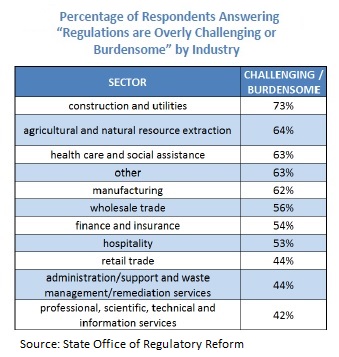
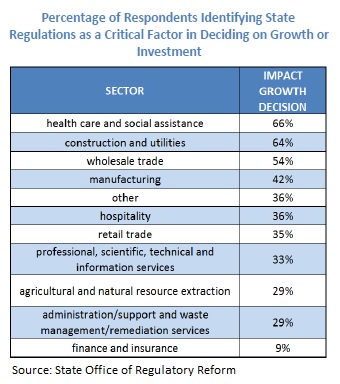
The volume and complexity of regulations is so extensive that one third of business owners said they had to hire a consultant to help them sort through them, in an effort to comply. Just over half, 52.1 percent, said the cost of compliance is greater than $2,000 a year. Nearly as many, or 45.3 percent, said state regulations are a “critical factor in deciding to grow or invest in their business,” according to a report issued by the state Office of Regulatory Reform. (A total of 709 businesses responded to the survey.)
GET THE LATEST BREAKING NEWS HERE -- SIGN UP FOR GOLOCAL FREE DAILY EBLASTBusiness owners said state regulations are the biggest challenge they face, second only to the rising cost of health insurance and ahead of credit issues, declining consumer demand, global competition, and new technologies, according to the report.
“Why would anyone be surprised that we have an out-of-control regulatory climate? In addition to taxes, fees, and licensing barriers, regulations are just another form of big government, which we already give far too much love to in Rhode Island. The high number of regulations in our state contributes to the overall poor business climate we have become infamous for,” said Mike Stenhouse, the CEO of the Rhode Island Center for Freedom and Prosperity.
No doubt there are some regulations that most people would agree make sense. The regulations on daycare centers, for example, mandate criminal background checks on all employees and volunteers. And they require testing for certain infectious diseases.

But the state guidelines on daycare also mandate 15 fire drills a year and written menus for meals. They stipulate how much floor space per child will be in each classroom, how many inches deep organic cushioning must be on the playground, and require hand washing with warm water and liquid soap—no exceptions for hand sanitizer—after staff wipe a kid’s nose.
In all, there are 122 individual rules governing daycare centers issued by the Department of Children, Youth, and Families.
A separate set of 110 rules, maintained by the Department of Education, applies to kindergarten and preschools—mirroring its DCYF counterpart but with differences down to minute details, such as a rule requiring nine inches of cushioning on playgrounds, rather than the six needed for daycare.
“Except for the few regulations that are absolutely essential for safety, an aggressive regulatory system like ours disproportionately affects small businesses and is problematic for a number of reasons,” Stenhouse said. He said they remove decision-making freedom from entrepreneurs, which he describes as the “life-blood” of the U.S. jobs market. Many regulations are “anti-free market” while others “advance radical environmental or other social equity agendas.”
“Many others, in the name of public safety, are just downright silly. There is also a significant enforcement cost to taxpayers, while regulations also result in higher product and service costs to consumers,” Stenhouse concluded.
Fire and food codes especially onerous
One area that some businesses view as a regulatory nemesis is the 158-page state fire code, which was revised after the Station Nightclub fire in 2003, according to John Hazen White, Jr., a business advocate and CEO of Taco, a local manufacturer. While not an issue for his business, White said the cost of retrofitting restaurants has wiped some out of business.
Still, that doesn’t mean he disagrees with the rules. Instead, Tarro sees their value. “It’s not easy but it’s something we understand why we have to do it and we stay on top of it,” he said.
His biggest challenge, Tarro said, remains taxes, especially commercial property taxes in Providence, which are the highest in the country among large cities, according to a recent report from a Minnesota-based think tank.
One tax-related bugbear for many businesses across the state is the minimum $500 business corporation tax that is mandatory even for inactive businesses. While the amount may seem small, it can be crushing for tiny startups with just a handful of employees. “That’s like one person’s weekly salary,” White said. “That’s a big number for those people.”
Regulations don’t merely limit opportunities for business. They also curb them for up-and-coming workers. White, for example, said Gov. Chafee asked him if he was interested in creating an apprenticeship program with his business. White said he considered it, but ended up passing on it after looking over the 21-page state rulebook on apprenticeship programs. “It’s too complicated,” White said.
State: 838 regulations reviewed for impact
The state appears to be making a good-faith effort to respond to complaints of the business community. In September last year, Gov. Lincoln Chafee announced a plan to exhaustively review all state regulations, assess their impact on businesses, and identify regulations that may need to be altered or all-together scrapped.

All regulations are expected to be reviewed by next January and a report recommending changes will come the following June, according to Leslie Taito, director of the Office for Regulatory Reform.
New fire code: sprinklers and alarms out for certain businesses
But some state agencies aren’t waiting.
Last January, the Fire Safety Code Board of Appeal and Review issued a new fire code for the state, after a year-long process of conferring with state lawmakers and hearing from business owners, said its director, Tom Coffey.
In particular, he said the board increased the threshold at which small businesses need to have an alarm system, exempting smaller buildings. The board also eased back on strict rules on sprinkler systems that once would have required them for homes with multiple occupants, such as a triple-decker with an occupied attic, Coffey said.
The rules were also loosened a bit for storage facilities and businesses that don’t operate at night, according to Coffey.
In an interview, Coffey wondered if business owners who vented through frustrations over the fire code were referring to the old one rather than the revision. He noted that at the final public hearing, the new code seemed to garner widespread support. “At the final hearing, everybody appeared to be happy with it,” he said.
Some tax regulations on the chopping block
The state Division of Taxation has also scrubbed some regulations from its books as a result of the statewide regulatory review, according to the state tax administrator, David Sullivan.
“Because of a months-long internal review of all of our regulations, the Division of Taxation has been able to eliminate some regulations, and revise and clarify others—all of which helps reduce the burden on taxpayers, whether they are individuals or businesses,” Sullivan said in a statement.
“The report issued by the [Office of Regulatory Reform] highlights areas where we need to focus, and, as a result of the review, we will continue to address all of our regulations, not just these two,” Sullivan said. “Sales tax laws and corporate tax laws are complex no matter what jurisdiction has them. We are constantly working to refine our sales tax and corporate tax regulations to make them easier to understand and to foster greater compliance.”

But other state agencies yesterday signaled a willingness to defend all of their regulations.
A spokesman for the Rhode Island Department of Education, for example, defended the rules on kindergarten and preschool. “Our preschool and kindergarten program approval standards are designed ‘to protect the health, education, safety and welfare of the children of the state who attend preschool programs,’” said spokesman Elliot Krieger. (Click here to read all of the rules.)
Krieger was asked about some specific rules, such as the mandate on playground cushioning depth, and this one: “There shall be designated adult space with adult-size furniture for functions such as planning, meeting privately with parents, storage of staff materials, breaks, etc.”
“These standards are not frivolous; they protect student and staff health and safety and they ensure an environment that is appropriate for the care and education of very young children,” Krieger said.
Stephen Beale can be reached at [email protected]. Follow him on Twitter @bealenews