Liberal vs. Conservative, In-State vs. Out of State. Who has the Cash?
GoLocalProv News Team
Liberal vs. Conservative, In-State vs. Out of State. Who has the Cash?

The GoLocalProv analysis focused on those groups or private citizens that made independent expenditures on behalf of a candidate or a campaign—rather than directly donating to that candidate. This kind of political spending has the fewest restrictions—including no limits on the amounts—leaving the door wide open to virtually anyone who wants to influence the election one way or another.
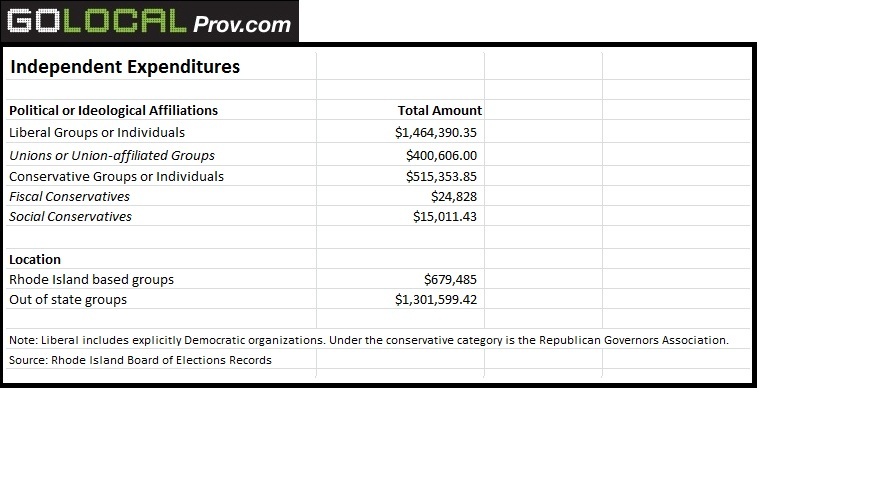
A review of the reports filed for 2010 shows just how strong spending among liberal groups was compared with conservatives—and how significant out of state money really was. (See the below chart for exact breakdowns.)
GET THE LATEST BREAKING NEWS HERE -- SIGN UP FOR GOLOCAL FREE DAILY EBLAST• Liberals vs. conservatives. It’s not even close—liberal or Democratic-learning individuals and groups out-spent conservatives nearly 3 to 1. In dollar amounts, that comes out to about $1.4 million versus $515,000.

• Most money out of state, but most groups in state. Most of the independent expenditures were made by groups from outside of Rhode Island—totaling nearly $1.3 million, leaving about $679,000 from Rhode Island. However, the vast majority of the out-of-state money came from just three groups: the Democratic Governors Association, the Republican Governors Association, and the Committee for Justice and Fairness. In Rhode Island, 20 groups or individuals made independent expenditures.
The future of such unlimited, seemingly rule-free spending is unclear. Prior to 2010, it was hardly a factor in Rhode Island, but that all changed in the wake of the Supreme Court decision in Citizens United, which determined that corporations could spend unlimited amounts of money. Private citizens and unions also are not bounding by spending limits—as long as they spend it directly instead of donating to a candidate. Common Cause Rhode Island, a local good government group, has said that overturning the Supreme Court decision is impractical, but the group says it will push for legislation to tighten reporting requirements.