


Whitcomb: Communal Living; It’s All Business! Congestion Tolls Help Burbs
Robert Whitcomb, Columnist
Whitcomb: Communal Living; It’s All Business! Congestion Tolls Help Burbs

“I lived between my heart and my head,
like a married couple who can’t get along.
I lived between my left arm, which is swift
and sinister, and my right, which is righteous.’’
-- From “Self-Portrait,’’ by Edward Hirsch (born 1950), American poet
“Those who make peaceful revolution impossible will make violent revolution inevitable.’’
-- John F. Kennedy (1917-1963), U.S. President
“Thanks be to God: since my leaving drinking of wine, I do find myself much better and do mind my business better, and do spend less money, and less time lost in idle company.’’
-- Samuel Pepys (1633-1703), English writer and Tory politician
“All our enemies are mortal.”
-- Paul Valéry (1871-1945), French poet, philosopher and essayist.
xxx
We’ll be mostly freed of Super Bowl bathos for a while. The bathos has reminded me of how little many local “journalists’’ take the advice of the late great sportswriter Red Smith (1905-1982) to try to cover pro-teams impartially rather than as shills. His advice was to follow the ball and not the team.
The relentless Patriots promotion around here led me to briefly become a Seattle Seahawks fan, though I suppose it’s just as bad there. Oh, well --- whatever brings us together.
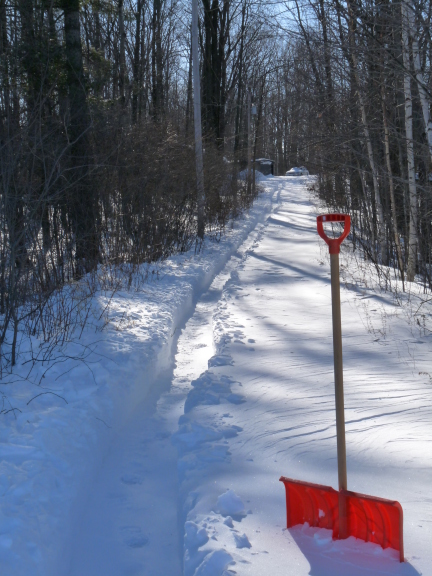
This is the time of the winter when the higher angle of the sun’s rays becomes such that melting of snow and ice on roads and sidewalks starts to noticeably speed up, albeit in fits and starts, sunny day to sunny day.
There are other signs that spring will return, such as the appearance of the pussy willow’s soft, fuzzy, gray flower buds. And look for Red-winged Blackbirds, American Woodcocks, and common Grackles. The arrival of American robins is also a beloved sign of nearby spring, but increasingly, they’ve been wintering over, which hasn’t been so great for them this year.
We remain surprised that so many birds wintering over survive such very long stretches of Arctic cold as we’ve had in the past few weeks, though we suppose that these brutal cold waves have killed many of them this winter.
(We put bird food in the feeder soaked in peppery stuff that’s supposed to discourage squirrels from feasting. It has little effect! These rodents will be among the species that will inherit the earth.)
Another sign that spring will soon come: People whining about having to do their tax returns and denouncing the Internal Revenue Service. But don’t blame the grossly understaffed IRS: Blame members of Congress, many of them taking orders from special interests – businesses and very rich individuals -- that get grossly unfair advantages in the tax code, and endlessly complicate our attempts to understand and complete our income taxes, if we make enough to have to pay them.
Communal Living
Reading historian Jill Lepore’s memoir in The New Yorker of living in a house with a bunch of other young people in Somerville, Mass., in the early ‘80’s and Don Morrison’s recollections of living in New York as a young man in (?; he keeps his age secret) reignited my memories of living in a Manhattan Upper West Side apartment with a changing cast of characters in the early ‘70’s. I had gone to Gotham to attend grad school and then get a job, having left my first full-time job, at the old Boston Herald Traveler, because I knew that the imminent loss of its TV-station license would put it out of business.
Living with me in the rather shabby, but once rather grand, 1920’s apartment, with five rooms, was a changing cast of, usually, five or six characters. One, a chap who would go on to become a Hollywood agent and die fairly young, had been enjoying a draft deferment by working for the Children’s Television Workshop; another a guy who couldn’t decide what he wanted to be, so he kept switching graduate schools; a man who became a moderately successful film director; a granddaughter of Hollywood mogul, and a young woman (my best pal in the place) who became a celebrated film editor. From time to time other young adults would “crash” there. Maybe the population occasionally rose to eight people; I had no idea who some of these people were, but none of them were over, say, 32.
Marijuana use was not rare, and we would occasionally project movies (some first run – we had distributor connections) on a white bed sheet in the living room. It was always one of my sheets, taped to the wall; everyone else had tie-dyed or printed ones. There were other amusements that would distract us from the acrobatics of the hundreds of cockroaches resident in the kitchen.
I sort of wish I had written soon thereafter about those gritty but oft exciting Warholian times as New York was falling but my group was mostly rising. My memories of them are more precise than what I remember from, say, last July, or last week, for that matter.
Oh, yes, I met my wife because of living there – 574 West End Ave. – in a convoluted way.
My most notable previous experience in communal living was in my college fraternity house, a sagging red-roofed Victorian with a turret. I lived on the open ski-lodge-like third floor for a year. It was lively and educational because of the very wide range of the backgrounds of my housemates, some foreign, and there was remarkably little conflict, verbal or otherwise. Indeed, it was usually quite demure, except sometimes on Wednesday nights, when a half keg of beer appeared in the bar/ping-pong room in the basement and, especially on Saturday night, when a full keg was open for business. The powers that be in the fraternity favored Motown on our jukebox. We had a few old-fashioned cocktail parties. The real “Animal House” was across campus.
Group living can be enlightening and entertaining – for a while.

Public sleaze in the United States continues to worsen as the most corrupt presidential administration in our history more and more uses public power for the private gain of Trump, his family and his wider circle. It has set an example that many strivers hope to emulate for fame, or at least fortune.
Of course the moral rot in large parts of the American establishment has been underway for a long time, as the Jeffrey Epstein saga shows all too vividly.
It’s hard to keep up with the regime’s squalor. There’s Trump’s international “Board of Peace’’ -- a way for Trump’s entourage to make money off international real-estate and other deals. Look for Trump son-in-law Jared Kushner to play a key role. Club Med Gaza?
Then there’s what will ultimately be many billions of dollars from the sale of Venezuelan oil. Proceeds are going into Qatari banks, away from prying eyes. (Qatar, where I spent a bit of time in, has very close ties with the Trump crowd.)_There, the money can serve as a slush fund for Trump and his family, et al. It’s interesting that the first major sale of Venezuelan oil, grabbed after Trump’s arrest of dictator Nicolas Maduro, was via Vitol, whose senior trader, John Addison, gave $6 million to the Orange Oligarch’s 2024 campaign.
But my favorite recent example is Trump, via Commerce Secretary Howard Lutnick, Wall Street crook and Jeffrey Epstein pal, threatening to block the opening of the new Gordie Howe (famed hockey player!) International Bridge, between Detroit and Windsor, Ontario. That’s because Michigan trucking mogul and Trump donor (at least $600,000) Matthew Moroun, complains that the new bridge will take away toll revenue from the Ambassador Bridge, which he owns. The new span, to be owned by Canada and Michigan, is to serve the busiest trade route between the U.S. and Canada.
Should such facilities be in private hands at all?
Trump’s actions on the bridge are bad for business, yet more shoddy treatment of a (former?) ally, and bad politics too.
Meanwhile, the Defense Department continues to approve loans and contracts for companies closely tied to Donald Trump Jr., and his daddy’s sale of presidential pardons continues at a good clip. And the family is heavily into crypto, which is marvelous for money laundering.
xxx
Yet again, a poll counts Vermont’s Phil Scott as the nation’s most popular governor, with an approval rating of 74 percent. Scott, who has led the Green Mountain State since 2017, is one of the dwindling number of moderate Republicans notable for being mildly fiscally conservative and mildly socially liberal and, crucially, able to cut bipartisan deals. I miss them! But then, Vermont politics are generally honest, practical and amiable.
Consider that Vermont is a very Blue State that put Democratic Socialist Bernie Sanders in the U.S. Senate.
xxx
Trump has made a lot of threatening noises about taking down Cuba’s Communist dictatorship, in part by what’s doing now – starving it of oil. But the reason is no more that of human rights than his kidnapping of Venezuelan tyrant Nicolas Maduro was about human rights and quelling the drug trade. It was for oil.
It’s about opening up Cuba for massive investments in resorts and casinos, and residential developments for (mostly affluent) Americans, etc. Think Florida Gold Coast South. Along with that might come lots of organized crime of the sort that flourished on the island before Fidel Castro took over, in 1959.
Coming to Like It
New York City’s $9 per-vehicle toll on vehicles entering Manhattan’s central business district, \which started in January 2025, is aimed at letting traffic flow faster there by getting more people on mass transit. That’s where the toll money will be spent. It’s working well there AND has also speeded traffic in the city’s outer boroughs and in the New Jersey and Connecticut suburbs – places with the most vehement foes (egged on by Trump) of the new toll. So opinions are changing there.
Congestion pricing needs to be expanded to Boston.
Faster traffic saves money for drivers, more than paying tolls costs them. Gridlock is very expensive! Time is money.
xxx
Romania, one of the world’s original big oil-and-natural-gas sources, has become a very important place to watch as it tries to transition to clean energy. As The Guardian notes:
“The country has decoupled economic growth from pollution faster than anywhere else in Europe, and perhaps even the world.’’
America, however, is going in reverse on this.
xxx
Female actors used to always be called “actresses.’’ Now they’re just called “actors.’’ And the pronouns “he” and “she’’ are being replaced in subsequent references with “they’’ in some publications, for fear, I guess, of offending trans people. This often makes it tough to figure out who people are when you’re reading.
Too bad.
xxx
For deconstructions about the crime rate and other stuff, SEE HERE