


RI Is Falling Behind in Genome Sequencing and It May Be a Big Mistake
Nick Landekic, Guest MINDSETTER™
RI Is Falling Behind in Genome Sequencing and It May Be a Big Mistake

Presently, Rhode Island trials the rest of New England in conducting this form of critical testing, de facto, an early detection system for the variants.
Our struggles with the coronavirus are a war, not a battle. No one wants to hear it, but we must learn to live with it for the long term and adapt to the new reality of the coronavirus being with us for a long time.
GET THE LATEST BREAKING NEWS HERE -- SIGN UP FOR GOLOCAL FREE DAILY EBLASTThe most important thing we must do (and Rhode Island in particular needs to do much better) is to get everyone vaccinated as soon as possible, much faster than has been done so far.
Genomic sequencing is the next thing we (and again especially Rhode Island) must do much better, to identify hot spots of spreading variants, and then respond to them. Without high capacity, rapid genomic sequencing, the we run the risk of being over-run with resistant variants that blunt the effectiveness of vaccines - and we wouldn’t know it until infection and death rates increase. Rhode Island is in exactly this wide-open vulnerable position right now.
The code for how the virus is built is its ‘nucleotide sequence’, a set of about 30,000 ‘letters’ of RNA, ribonucleic acid. Changes in any of these ‘letters’ are a mutation, like a change in the ‘software code’ that builds the virus. Mutations are random and most are irrelevant or can even be damaging to the virus. However, the rules of evolution select for mutations that help the virus survive. With billions of mutations happening all the time, some turn out to be beneficial to the virus – and harmful to us. Mutations that make a strain more easily transmitted, or to escape treatments and vaccines, enhance its survival, become dominant - and cause more infections and deaths. Once that happens, a new mutation can spread fast and quickly become the dominant variant in an area. This has happened in the U.K. and South Africa, and can happen anywhere.
The U.K. B.1.1.7 variant is a combination of both more easily transmitted, and more deadly. It has been confirmed in Rhode Island, and is doubling every 10 days.
The South Africa B.1.351 variant is the nightmare triple combination of being more transmissible, more deadly, and is resistant to vaccines.
The South African variant has been confirmed in Massachusetts and is most likely already in Rhode Island as well.
Variants can arise independently in more than one place at a time. This is the principle of simultaneous convergent. A mutation that is beneficial to the virus in South Africa is just as helpful to it in Rhode Island. The variants typically called “South Africa” or “U.K.” may well have independently emerged here, and were not brought in from those countries. They were probably home-grown, as other variants will be in the future.
This is why it is so important to get the infection rate down as much as possible, as fast as possible. The more people who are infected, the more mutations we will get.
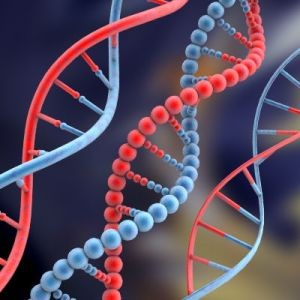
It is vital to know where and when variants appear, because they can spread more easily, can be more lethal, and some are becoming resistant to vaccines. This is why every state must do regular and extensive genomic testing of positive COVID tests – to know in real time if there are variants spreading. For example, another new variant has recently been found in the U.K., the B.1.525. Without genomic testing, this would not be known.
If a variant is identified, then the crucial action needed is to do something about it. Since some variants can spread more easily and be more deadly, they must be contained before they have a chance to spread widely in the community.
For example, if Rhode Island did comprehensive genomic testing and found a hot spot and cluster of the ‘South Africa’ B.1.351 variant in a particular town, the imperative would be to contain that area to keep it from spreading to the rest of the state. This is especially essential in a small state like Rhode Island – unless it is immediately contained, a variant could quickly and easily spread to the rest of the state. This is also why reopening bars is the ultimate in foolishness at a time like this. It’s not just about one person’s ‘right’ to go to a bar – it’s about the harm this could do to everyone in the state.
How much genomic sequencing is needed to have a reasonable handle on variants is driven by the math of contagion. The Biden administration has issued guidance based on input from experts that at least 5% of positive COVID tests need to be genomically sequenced to understand variants https://www.advisory.com/daily-briefing/2021/02/18/coronavirus. As a whole, the U.S. does not come close to meeting this goal. Currently, Hawaii does the most genomic sequencing at 3.5% of samples, followed by Maine at 2.5%.
Sadly, but not surprisingly, Rhode Island is far off the goal, doing genomic sequencing of only 0.18% of all samples – an appalling 28 times less than is needed. Rhode Island has submitted only 216 SARS-CoV-2 gene sequences to the Centers for Disease Control, out of a total of 123,145 positive COVID cases. With such a miniscule level of genomic testing, Rhode Island is clueless about the extent of variants in the state. We have no idea of where or how widespread they are.
This means that more transmissible, more lethal, resistant mutations could spread without anyone knowing about it until it’s too late. If the variants happen to be those with greater resistance to vaccines, like the B.1.351 already confirmed in Massachusetts, it could hurt the state’s already disastrous vaccination efforts even more. Any reopened bar could turn into a super-spreader event if someone who is infected with a more dangerous variant goes there.
Sorry to say, but the coronavirus is here to stay. It will unfortunately be with us for a long time. If we want life to be safe and enjoyable, we have to develop ways to live with it. So far Rhode Island is completely failing across the board, with a continued critically high level of infections, poor performance in distributing vaccines, one of the highest COVID death rates in the country, and woefully lacking genomic testing. Whether we like it or not, to be able to live safely, and to have fun doing it, going forward will require being able to distribute vaccines quickly, conduct enough genomic tests to identify mutations, and the reasoned, decisive leadership to act on the information and do what’s needed to contain variant hot spots when they are found. This can only be done and coordinated on a state-wide level.
Without this, life in Rhode Island will be neither safe, nor much fun, if every interaction with another person raises the risk of infection.
Nick Landekic a retired scientist and biotechnology executive with over 35 years of experience in the pharmaceutical industry.