


Brown Alpert Medical School Malaria Expert Kurtis on Gearing Up for Phase One Vaccine Trials LIVE
Brown Alpert Medical School Malaria Expert Kurtis on Gearing Up for Phase One Vaccine Trials LIVE
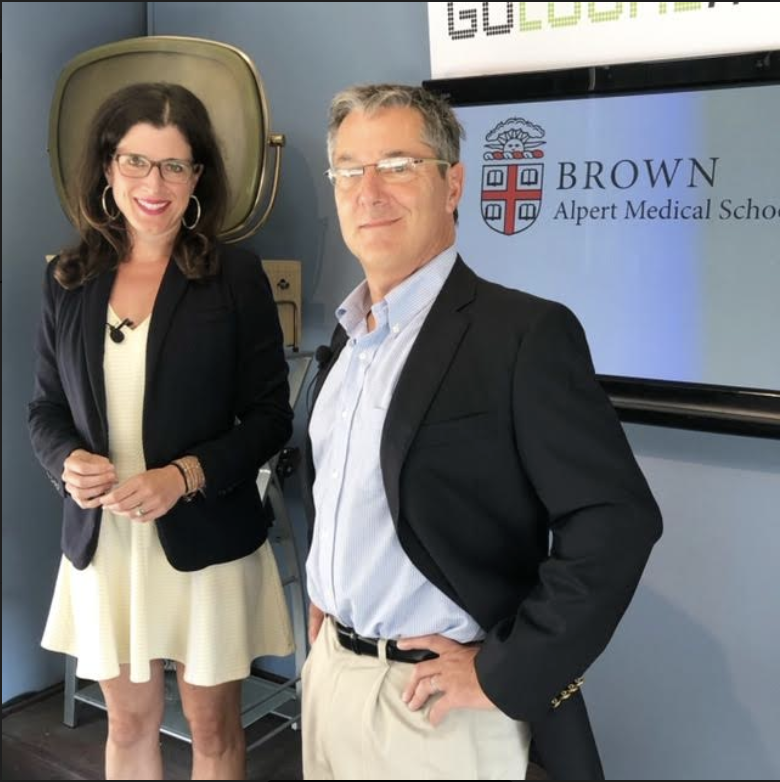
Kurtis, who is the Stanley M. Aronson Professor of Pathology and Laboratory Medicine and Chair of Department of Pathology and Laboratory Medicine, received his BA in geology/biology from Brown University — spoke to how his academic career has come full circle at Brown.
“I was doing an undergraduate semester abroad, and instead of going to Prague or Rome or Vienna, I ended up going to Kenya and really had some remarkable experiences there that were sort of formative in my entire career — and another was being lucky enough, and I use the word carefully, lucky enough to contract malaria,” said Kurtis.
“So the juxtaposition of getting a particularly nasty case of malaria and falling in love with research and waking up and realizing that malaria is one of the primary reasons development has not been as fast or as thorough or as widespread as we would hope in sub-Saharan Africa,” said Kurtis. “Malaria in general is the most important single-agent killer of children on the planet — nothing actually comes close to it.”
Finding a New Vaccine
“When we got involved in this work we looked at the history and said wow, starting with a mouse doesn’t seem to make a ton of sense — so we actually start with human — we’re fans of mankind. We actually start in villages where kids have lots of malaria and when you go into these villages, most in sub-Saharan Africa, dominantly in Kenya and Tanzania, [and] what you’ll see is some children are resistant, some children aren’t and the question is why,” said Kurtis. “The kids are interesting. The kids aren’t always resistant, they’re susceptible when they’re very young and then some get resistant and some don’t, so we try to ask immunologically what’s the difference between the two kids — and can we make the susceptible kids look like the resistant kids.”
“We have gotten to the point where we have identified malarial proteins that are recognized by antibodies that only resistant kids make — susceptible kids don’t make these antibodies. We can make them in great big vats in our laboratory using recombinant DNA technology. Then we challenged non-human primates with real-life malaria and they have significantly less disease and significantly less malaria," said Kurtis.
Kurtis said to move forward to a trial phase, it would need between “five and seven million dollars” — and spoke to the role that NIH, pharmaceutical companies, and venture funding all would need to play.
“Then you have to make a clinically pure enough product to put into a human — you’d enroll typically 10 to 20 individuals and you’d vaccinate them with your vaccine or a control and do nothing else — and that could happen right here in Rhode Island,” said Kurtis. “Once you vaccinated these individuals you take their serum and see if it kills parasites in culture. If it does, that’s a very successful phase one job.”
“Unique Moment in Brown’s History”
“We’re at a unique moment in Brown’s history, and we’re unique because — I like to think of it as a holy trinity — you’ve got a president, provost, and Dean of Medicine that are absolutely all on the same page in terms of advancing the research, medical research infrastructure and clinical care here in Rhode Island,” said Kurtis.
“You’ve also got a chancellor who’s fully on board with the program. That’s allowed a number of innovative things to take place [and] the new growth in the Department of Pathology that I’ve been very fortunate to chair the past couple of years,” added Kurtis. “We’re bringing in amazing researchers — this is the kind of work you can’t do alone, you really need to partner with many different individuals and this has allowed us to attract the talent because of the investments these individuals have played right here.”