


Trump Trots Out His Big Lie Playbook in Advance of Midterms - Horowitz
Rob Horowitz, MINDSETTER™
Trump Trots Out His Big Lie Playbook in Advance of Midterms - Horowitz
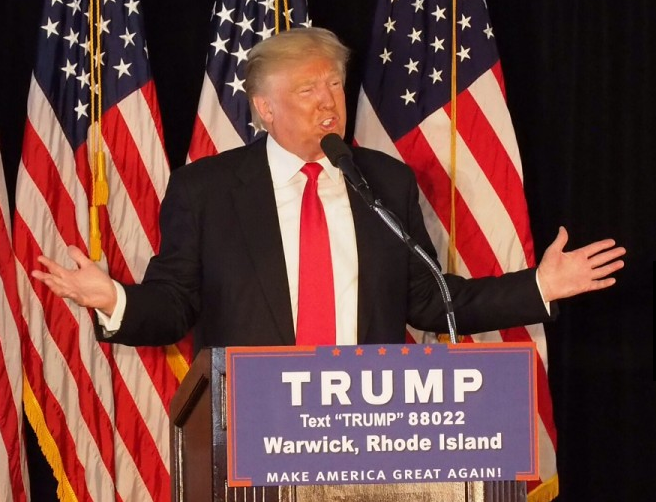
Sensing there was a very good chance he was going to lose the 2020 presidential election, Donald Trump began calling the use of mail ballots fraudulent without supplying any evidence and arguing the election could be rigged against him 8 months or so before election day. As he fell further behind Joe Biden in the summer and early Fall, he stepped up these claims, refusing to commit to accept the results of the election. Some of his key supporters, including his former chief of staff Mick Mulvaney, attempted to reassure the nation that it was just so much bluster; when it was all said and done, if he was defeated, Mr. Trump would accept the results.
To say that didn’t turn out to be the case would be a dramatic understatement. In the wake of losing the electoral college 306-232 and the popular vote by more than 7 million, the president launched an all-out lawless effort to cling to power by any means necessary. This culminated in a violent attack on the Capitol on January 6, aimed at blocking the required and routine Congressional certification of the electoral college count.
GET THE LATEST BREAKING NEWS HERE -- SIGN UP FOR GOLOCAL FREE DAILY EBLASTSo, when President Trump, who to this day clings to the “Big Lie,” continuing to falsely claim he was the real winner of the 2020 election, begins to make noise about how the 2026 midterms are going to be rigged against the Republicans and the federal government should act to prevent it, it is important for all of us to pay close attention. “We want to take over,” Mr. Trump told Dan Bongino last week on the former deputy FBI director’s podcast. “We should take over the voting, the voting in at least many — 15 places. The Republicans ought to nationalize the voting.”
Mr. Trump’s conversation with Dan Bongino cannot be viewed in isolation. It is just one of a series of recent comments about election fraud, primarily focused on falsely insisting there is widespread voting by illegal immigrants in our elections, a thoroughly debunked claim flatly contradicted by a series of studies, including one by his allies at the Heritage Foundation. Perhaps most alarming, Mr. Trump recently said one of his main regrets about 2020 was that he didn’t seize the voting machines after the election.
The president is also backing up his words with action. The FBI with director of National Intelligence Tulsi Gabbard in tow seized 2020 ballots from the Election Hub and Operations Center in Fulton County, Georgia at the end of January. The pretext appears to be that 315,000 early votes in this Democratic stronghold that includes Atlanta were filed without poll workers signatures. This is a minor technical violation, according to election experts, one that would have no impact on the vote count. “A clerical error at the end of the day does not erase valid, legal votes,” the Republican secretary of state Brad Raffensberger posted online. “Georgia has the most secure elections in the country and all voters were verified with photo ID and lawfully cast their ballots.”
It is not a coincidence that the president is stepping up his toxic brew of combining false claims about the 2020 election with repeated warnings that the 2026 election is going to be rigged as well at the same time as his declining approval ratings are making the Democrats solid favorites to retake the House and are increasingly putting control of the Senate in play. If Republican chances of winning continue to dim as we move closer to the election, count on Mr. Trump’s efforts to cast doubt on the results to become even more determined.
In terms of actions, however, his task is probably more daunting than his failed effort to overturn the results of the 2020 election. Even if the battle for control of Congress ends up being very close, it will still in all likelihood require the results of several races to be invalidated. On the other hand, unlike in 2020, when some members of his administration, including Attorney General Bill Barr and Vice President Mike Pence, stood in his way. Mr. Trump has a compliant Justice Department and national security establishment to do his bidding.
Given Mr. Trump’s demonstrated willingness to use all means at his disposal regardless of their legality to tilt the playing field in his direction or overturn election results, however, state and local election officials must prepare for unprecedented federal intrusions. “Trump appears to be crossing a line from urging Congress to set additional election requirements into wanting the federal government’s hands on states’ election administration infrastructure,” Barry Burden, a professor of political science at the University of Wisconsin-Madison and the director of the Elections Research Center at the university, told Stateline.
Mr. Trump’s actions in the wake of his 2020 presidential election still serve as the ultimate wake up call. For all those involved in overseeing and administering 2026 elections on the state and local level, as well as for the overwhelming majority of us who believe free and fair elections are essential, it is only sensible to prepare for the worst.