


Providence Faces $11M Deficit
Stephen Beale, GoLocalProv News Contributor
Providence Faces $11M Deficit

The deficit forecast, made by the Internal Auditor in a new report, comes on the heels of news that the city failed to eliminate the $22 million estimated deficit for 2012 that had some observers predicting municipal bankruptcy for the capital city. Ultimately, Providence ended last year with a $15.2 million deficit, according to the annual city audit.
Councilman David Salvatore, the chairman of the Ways and Means Committee, said the city is not done solving fiscal problems that first came to the fore two years ago, when Providence was saddled with a $110 million deficit. “While we’re not at the starting line, we’re not at the finish line either,” Salvatore said last night.
GET THE LATEST BREAKING NEWS HERE -- SIGN UP FOR GOLOCAL FREE DAILY EBLASTThe reason for the discrepancy between the Internal Auditor's budget projection and the administration's is unclear at this point. When the administration was asked about it yesterday, a Taveras spokesman refused to comment.
Pension system, overtime pay drive deficit
The current forecasted deficit is being driven by a number of different factors. A flood of new homestead exemptions and the collapse of 38 Studios have eaten away at $1 million in expected tax revenues. An estimated $2.7 million stems from a drop in employee medical co-shares. A shortfall in the annual pension contribution has punched another $4.1 million hole in the budget while firefighter overtime pay is ballooning past budgeted amounts by $2.2 million, according to the Internal Auditor's analysis.

A number of other smaller shortfalls are taking their collective toll on the budget as well: an overnight parking program that so far has yielded only $71,000 of the $600,000 it was supposed to produce; an estimated $500,000 overrun in the police overtime budget; and an estimated $400,000 shortfall in federal funds for city schools.
City needs ‘corrective action plan’
Clarkin last night suggested the city council should work with the Taveras administration to hash out a “corrective action plan” for the budget. That would conceivably entail a hiring and purchasing freeze, Clarkin said.
The city might get some addition help from state funding for distressed cities, an estimated $2.4 million, but that money is not guaranteed.
Sasse urged the city council to press for the corrective action plan. “If you don’t and you solve the problem with gimmicks—you do that a second and a third time, you’re really digging a hole for yourself,” Sasse said.
Underfunding the rainy day or pension funds would be frowned upon by credit rating agencies, Sasse added.
“They’re not long-term positives,” Clarkin said. “They’re not things you want to do.”
Councilman John Igliozzi expressed concern about the impact on the pension system. “I’m very concerned because I wouldn’t want to see a point where the city decided not to fund its contribution,” Igliozzi said. “It’s going to have a further detrimental impact on the unfunded liability.”
City runs deficits four years in a row
Sasse said the city also can’t keep running deficits, as it has been for the past four years, according to figures provided by the Internal Auditor. In 2009, the city ended the year with a $5 million deficit. In 2010 it was $12.5 million short. The deficit dropped by half that in 2011 but then doubled to $15.2 million last year, according to Clarkin.

Those deficits have to be made up by appropriations over a five-year period. This year’s payment on the 2011 deficit comes out to $1.3 million. The payments on the 2012 deficit won’t kick in until 2014, according to Clarkin.
“That really detracts from what resources you have available for city services,” Sasse said.
He urged the city to act on the budget this month, warning that waiting until May could limit its ability to deal with the deficit.
Salvatore expressed confidence that the city council would be able to work with the Taveras administration to address the problem. “I don’t think it’s an impossible feat; however, I think we have work to do,” he said. Salvatore declined to rule out any of the options outlined by Clarkin, but quickly added that the city needs to be responsible in its approach to the correction action plan.
Fire overtime pay over budget by $2.2 million
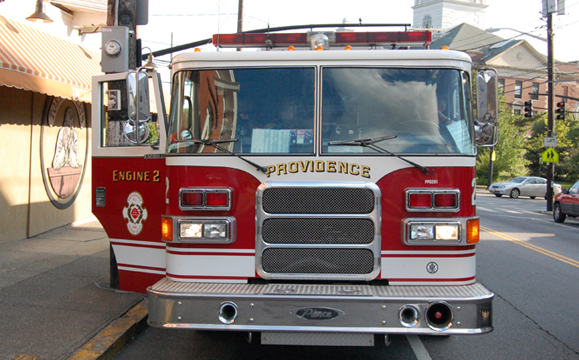
But Paul Doughty, the city firefighter union president, questioned the Internal Auditor’s projections. He said the last six months of a calendar year are the high point for vacations—for both the summer and the holidays—resulting in more overtime than would occur in the first six months of the next calendar year, from January to June.
He also expects overtime to drop once the new class of firefighters starts working at the department, boosting manpower by about 50 firefighters. The arrival of that class has been delayed by about six months so the positions could be advertised more extensively, Doughty said.
Overall, he questioned the administration’s and the Internal Auditor’s budget projections. “I’m not sure that either side is right. It’s probably somewhere in the middle,” Doughty said.
If the deficit is in the middle of the two estimates, that comes out to about one percent of a roughly $600 million annual budget—certainly a far cry from the days when the deficit threatened nearly a fifth of the budget. “I would say that is nothing short of remarkable,” Doughty said.
If you valued this article, please LIKE GoLocalProv.com on Facebook by clicking HERE.