PHOTOS: Two Whales Wash Ashore in Rhode Island In Two Days -- Both Die
GoLocalProv News Team
PHOTOS: Two Whales Wash Ashore in Rhode Island In Two Days -- Both Die

It marks the latest in Rhode Island, which saw another whale stranded in Potters Pond in South Kingstown on Thursday.
The Rhode Island Department of Environmental Management (DEM) announced Friday that whale has died.
GET THE LATEST BREAKING NEWS HERE -- SIGN UP FOR GOLOCAL FREE DAILY EBLAST
Friday’s Finding
According to Dan Gruslin, he encountered the beached whale carcass at Moonstone Beach at approximately 10:30 AM on Friday.
A spokesperson for the Rhode Island Department of Environmental Management (DEM) said that as the pilot whale carcass “appeared to be in pretty good shape,” that they will look to bury it next week.

On Friday, DEM announced that another whale found this week has died.
DEM shared the following:
"Mystic Aquarium confirmed today that the fin whale that has been stranded in Potter Pond, South Kingstown, died after a medical intervention at around 9:20 PM Feb. 29. The 42-foot-long, 25,000-pound whale was “found to be emaciated and in a compromised state,” the aquarium said.
“Whales are magnificent creatures and it’s very sad when these circumstances occur,” said Scott Olszewski, a marine biologist and Deputy Chief of the DEM Division of Marine Fisheries, which partners with Mystic Aquarium on whale strandings in Rhode Island. “Given this fin whale’s extremely compromised state, intervening medically was the most humane way of easing its suffering.”
DEM has transported the whale to its facilities where staff and external partners will conduct a necropsy. As sad as the death of a whale is, it offers scientists the rare opportunity to gather valuable information, which, hopefully, can be used to protect these animals from further endangerment.”
Beached Shark
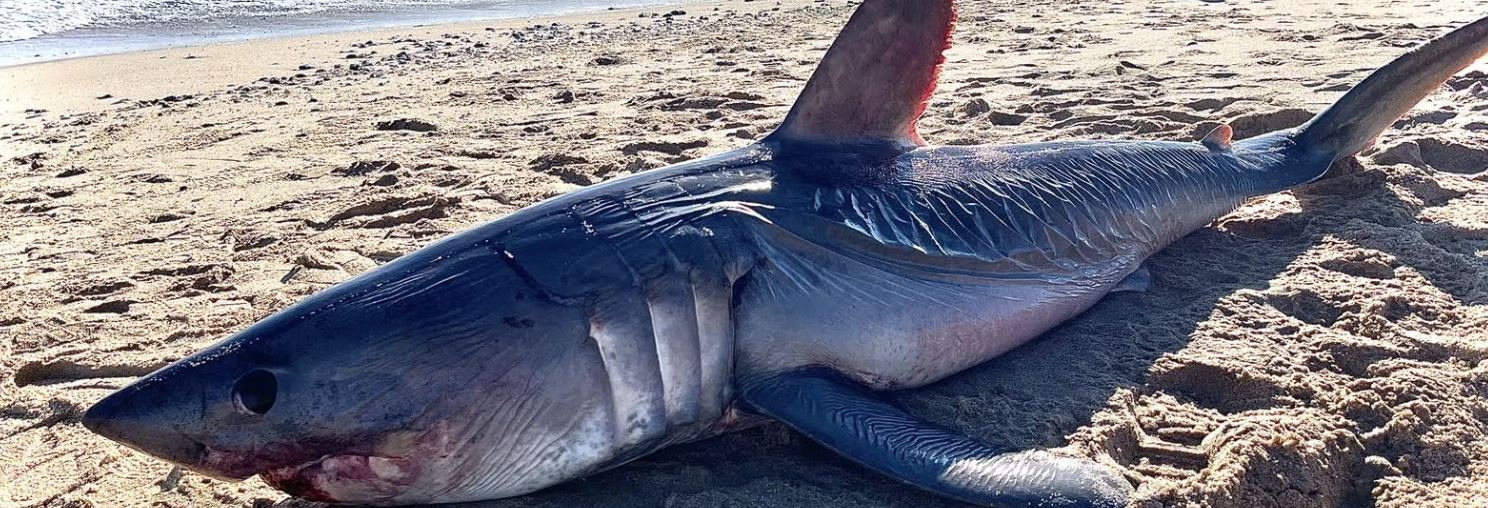
In early February, a shark washed ashore at East Beach in Watch Hill.
As GoLocal reported on February 8:
"A large porbeagle shark was found in Rhode Island on Wednesday, announced the Atlantic Shark Institute (ASI) -- and with the help of bystanders, it was quickly transported to a research lab."