


Brown Alpert Medical School’s Goldstein on Future of Weight-Loss Technologies on “Smart Health”
Brown Alpert Medical School’s Goldstein on Future of Weight-Loss Technologies on “Smart Health”
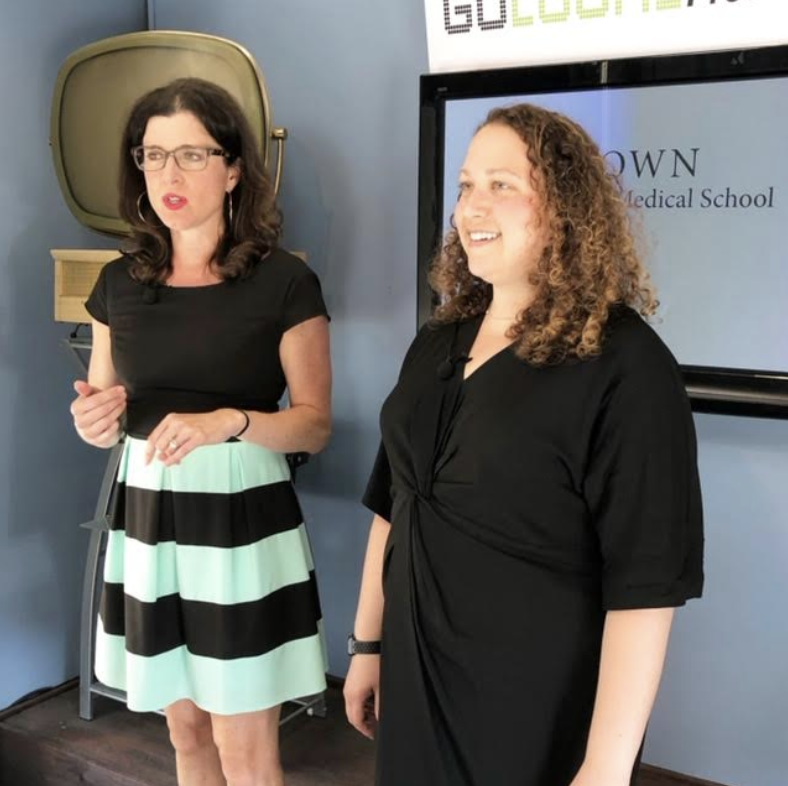
“I came to Brown about five years ago and I’m really fortunate because all of the things that I really love to study are all the things that are a tremendous strength [of partnering] with Lifespan and Miriam. A lot of my work focuses on using technology to help people change their health behaviors,” said Goldstein.
“So I’m really interested in working on that and people who are attending cardiac rehab— so maybe after they’ve had a heart attack or something they go to this program. It’s three times a week and they learn how to change their health behaviors to get a healthier lifestyle. Miriam’s program is one of the best programs in the nation and it serves as a model program for other ones as well," said Goldstein.
Goldstein, an Assistant Professor of Psychiatry and Human Behavior at the Alpert Medical School and the Weight Control & Diabetes Research Center of The Miriam Hospital, spoke to how technology can help the general population — but how when combined with the program at Miriam, she says it proves particularly effective.
“Most apps, they’re pretty good for self-monitoring. If you were to use an app to track how many calories you were eating at breakfast, lunch, and dinner, it does a great job with that. Some apps even have reminders now that you can customize for example, to remind you to eat if your blood sugar’s getting low,” said Goldstein. “But patients actually notice when they come to our center — the Weight Control & Diabetes Research Center of— they notice out programs have a lot more to them than just commercial apps.”
Future of Weightloss Research
Goldstein also spoke to how “sensor” technologies will impact the field.
“You know, our smartphones and our watches and whatnot — they already incorporate some sensors, so some of this integration is beginning to happen,” said Goldstein. “Right now, the sensors can only make use of so much data in so many ways, and the information that the patients are getting back from that is not particularly tailored and maybe only useful to a certain extent.”
"So in the future, I think we’re going to have more sensors, which could mean a wide variety of things, but we’re also going to get more sophisticated feedback that’s being tailored, and the thing we care about is ‘just-in-time’ adaptive interventions so actually getting this information to patients either in the moment — or at the moment right before they’re going to need it."
Since granting its first Doctor of Medicine degrees in 1975, the Warren Alpert Medical School has become a national leader in medical education and biomedical research. By attracting first-class physicians and researchers to Rhode Island over the past four decades, the Medical School and its seven affiliated teaching hospitals have radically improved the state's health care environment, from health care policy to patient care.
Smart Health is a sponsored content series with GoLocalProv.