


Wealth Gap - Rhode Island Ranks 46th for Homeownership
GoLocalProv
Wealth Gap - Rhode Island Ranks 46th for Homeownership
A new study shows that Rhode Island is ranked at the bottom of states for homeownership.
The data released by Wall Street 24/7 finds that Rhode Island ranks last in New England and 46th overall.
Only New York, California, Nevada and Hawaii have lower homeownership rates.
GET THE LATEST BREAKING NEWS HERE -- SIGN UP FOR GOLOCAL FREE DAILY EBLAST"There is a direct correlation between wealth and homeownership. For most people a home is the biggest asset a person will ever have. A buyer puts down a small amount of their own money (5-20%) of the purchase price, borrow the rest from the bank and enjoy the security of a roof over their head while watching their asset appreciate each year," said Sally Lapides the President and CEO of Residential Properties.
"Depending on when they are ready to sell their home, they are likely to see a huge return on their investment which then allows them to buy another home of greater worth," added Lapides, whose firm did in excess of $1.3 billion in sales in 2021 -- a RI record.

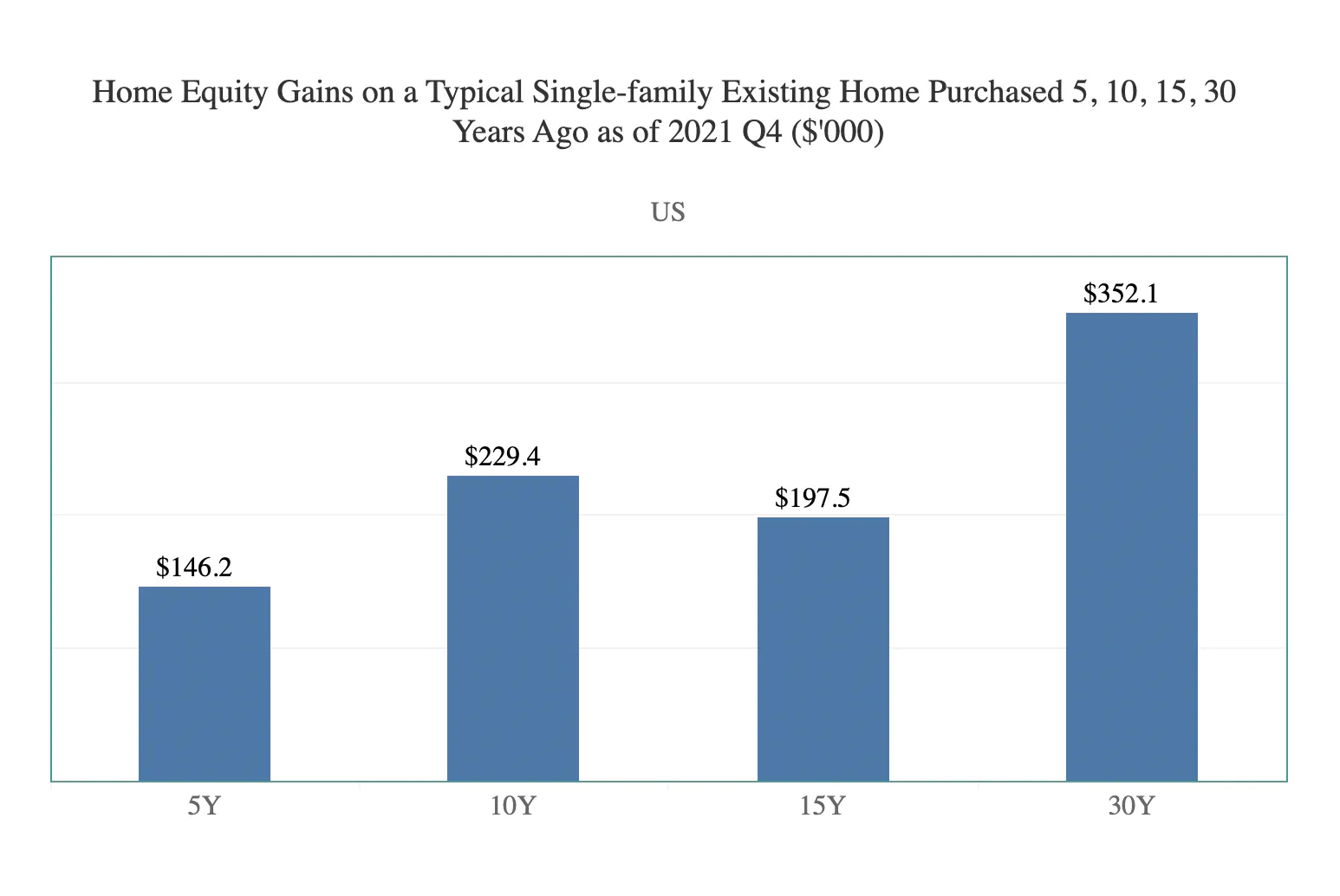
“Nationally, a homeowner who purchased a typical single-family existing home 10 years ago at the median sales price of $162,600 is likely to have accumulated $229,400 in housing wealth. Of this wealth gain, 86% can be attributed to price appreciation, with the median single-family existing-home sales price rising at an annual pace of 8.3% from the fourth quarter of 2011 through the fourth quarter of 2021,” according to a March report released by the National Association of Realtors.
According to the Wall Street 24/7 study, Rhode Island's ranked as follows:
> Homeownership rate: 61.6%
> Median home value: $276,600 (14th highest)
> Median monthly housing costs (w/a mortgage): $1,879 (11th highest)
> Median monthly housing costs (no mortgage): $745 (6th highest)
> Median household income: $70,305 (15th highest)
Changing Market
With interest rates now rising -- increasing from 3% to more than 5% in the past year for a 30-year fixed mortgage, and interest rates are likely to hit 6% or even harder -- the impact is that buying a home will be more expensive. It will be harder to buy for some and "less house" for others.
The March study published by Realtors found that "homeownership brings tremendous wealth gains. Total housing wealth rose $8.2 trillion from 2010 through 2020, with 6.3 million more new homeowner households. A homeowner who purchased a typical single-family existing home 10 years ago at the median sales price of $162,600 is likely to have accumulated $229,400 in housing wealth."

"The aggregate value of housing wealth rose across all income groups, but those in the high-income group gained 71% of the increase in housing wealth," according to the study.
Homeownership for Blacks was at the same level as before the federal Civic Rights Act passed, redlining was commonplace and housing rights laws were non-existent.
“In fact, in the past 15 years, Black homeownership has seen the most dramatic drop of any racial or ethnic group, and the Black homeownership rate in 2019 had descended to nearly as low as it was when discrimination was legal,” according to the National Community Reinvestment Coalition (NCRC).

"One change we have seen in the market is that student debt is crushing young adults so that homeownership is harder to achieve for many first-time buyers in this market. In the higher end of the market, many buyers have seen the transfer of wealth over the last five years having inherited money from their parents so that the next generation can buy much more expensive first and second residences using cash," said Lapides.