

James Clayton Sattel’s RI Summer: Newport’s Historic Neighborhoods
Email to a friend
Permalink
Saturday, July 28, 2012
James Clayton Sattel, GoLocalProv Contributor
Photographer James Clayton Sattel is passionate about Rhode Island, particularly those shores, crags, and vistas of his home island: Aquidneck. GoLocalProv is delighted to be collaborating with Jim this summer on curated sets of his images that capture coastal life so vividly.
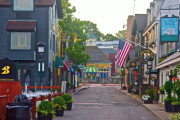
This week, Jim peers down streets and byways of some of Newport's most historic neighborhoods. "Given that Newport has scores of historic and contemporary sites to visit," Jim said, "my selection process was based on multiple factors—proximity to the hotels, motels, and bed and breakfast accommodations; nearby sites within driving and walking distance, as well as night clubs, restaurants, shopping, and live music."
"One needs to think through composition," he said. "Do you want photograps that emit the peace of early morning or the buzz of the day and evening? I chose the former. Also, I enjoyed the repetition of texture and color—concrete blocks, striking colonial colors, salt box architecture... at the outset, what looked distinctly different became a study of the structure's unique details."
To see more of or purchase Sattel's distinctive views, go here.
Prev
Next
Thames Street
Buzzing with daily commercial and tourist activity, Thames Street has been a center of Newport life for centuries. Thames Street (along with Marlborough Street) was one of Newport's original two streets officially laid out in Newport in 1654, providing access to the city's many wharfs. The southern part of Thames Street was historically home to a large Irish population in the nineteenth and twentieth centuries.
Prev
Next
Bellevue Avenue
When we think of historic Bellevue, we may picture the grand parade of mansions that line the avenue, but this commercial stretch is equally vibrant, interesting, and historic. Anchored by the Newport Casino, home of the International Tennis Hall of Fame, the north end of Bellevue positively hums with commerce.
Prev
Next
Thames Street II
The street takes its name from the Thames River in London, England, an area from which many of the early colonists migrated. Here, the northern view of Thames takes us back toward the Common Burying Ground, passing through several blocks of what was in the seventeenth and eighteenth centuries a Quaker settlement in the area near Easton's Point.
Prev
Next
America's Cup Avenue
This colorful avenue skirts between Thames Street and Newport's waterfront, which still teem with life and commerce. Both Bowen's and Bannister's wharfs lure tourists up and down their narrow lanes to enjoy the myriad restaurants and shops that now inhabit historic maritime buildings. But it's not all tourism... businesses catering to the sailor also reside along our waterfront—Newport will always be a center of sailing life.
Prev
Next
Washington Square
This beautiful square is the geographical and historical heart of Newport. The famed Old Colony House stands proudly at one end, the Brick Market at the other.
By the nineteenth century, this spot came to be known as “The Parade” and became a more defined, park-like area with boundary fencing, trees, fountain and a bronze sculpture of one of Newport’s military heroes, Oliver Hazard Perry.
Prev
Next
Lower Thames
The hustle and bustle of Newport feels especially vibrant on Lower Thames, where colonial homes now house restaurants, shops, and other small businesses.
Prev
Next
Touro Street
This view of Touro Street as it flanks Washington Square gives us a sense of the incredible variety in such close quarters in Newport. In the foreground, the Jane Pickens Cinema. In the distance, the bleached walls of historic Touro Synagogue. Built from 1759 to 1763 for the Jeshuat Israel congregation in Newport under the leadership of Cantor (Chazzan) Isaac Touro, the synagogue's cornerstone was laid by Aaron Lopez, a prominent merchant in Newport involved in the spermaceti candlemaking business and other commercial ventures.
Prev
Next
Bannister's Passage
These wharfs are among the most evocative along the Eastern seaboard. How can you not conjure Newport's thriving maritime history, walking among these buildings?
Prev
Next
Long Wharf
Newport remains an active fishing port, and these lobster pots, stacked as surely as the brick supporting the buildings across the lane, remind us of this every day. In the background, the steeples of old Newport stand guard, as they have for centuries.
Prev
Next
The Point
The Point is one of the oldest neighborhoods in Newport, and has one of the highest concentrations of colonial houses in the United States. The neighborhood sits between Washington Street and Farewell Street/America's Cup.
Prev
Next
Farewell Street
How fitting that this aptly named street borders two of Newport's historic cemeteries!
Common Burying Ground and Island Cemetery contain more than 5,000 graves, including a colonial era slave cemetery and Jewish graves.
The Common Burial Ground dates to the 17th century, featuring a remarkable number of headstones from that era—and a noted number of colonial African American headstones.
The Island Cemetery is a private cemetery started in the middle 19th century. Many members of Newport's most prominent families lie here in eternal rest.
Related Articles
Enjoy this post? Share it with others.
Email to a friend
Permalink
Follow us on Facebook Twitter See It Read It Share It